





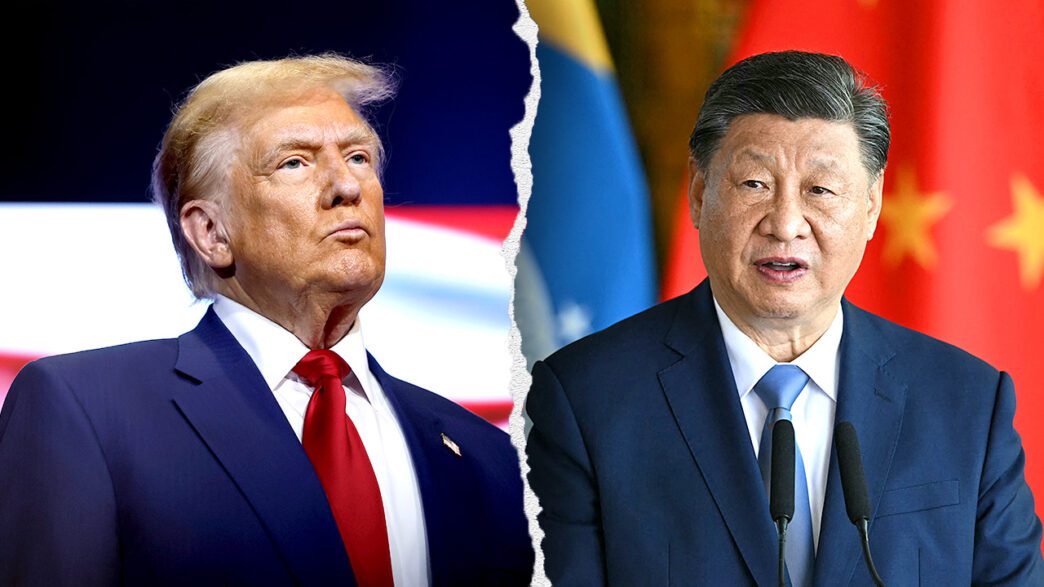
The deposition of Venezuelan dictator Nicolás Maduro has sparked questions about the country’s future — and its vast natural resources. While many, including President Donald Trump, have focused on Venezuela’s oil as a potential benefit to the U.S., one expert says the country’s rare earth minerals may be getting overlooked.
“I am pleased to announce that the Interim Authorities in Venezuela will be turning over between 30 and 50 MILLION barrels of high quality, sanctioned oil to the United States of America,” Trump wrote on Truth Social. “This oil will be sold at its market price, and that money will be controlled by me, as President of the United States of America, to ensure it is used to benefit the people of Venezuela and the United States!”
TRUMP TO MEET WITH OIL EXECUTIVES ABOUT VENEZUELA ON FRIDAY 
However, the president has yet to say what the U.S. would do — if anything — with Venezuela’s rare earths. Trump has used rare earths as leverage in other global situations, such as his deal with Ukraine, signaling their strategic importance.
“While everyone’s talking about energy, which is very important, and everyone’s talking about the human rights issue, regardless of what side you’re on, there are some other major issues here, and rare earth are definitely one of them,” Anthony Esposito, Founder and CEO of AscalonVI Capital, told FOX Business.
“If you look at the production, the mining production, 70% owned by China, reserves 50% within China, and 90% of the processing and refining is done by the Chinese. So, there’s a massive bottleneck there for the rare earths,” Esposito said. “The Chinese, along with the Iranians, but the Chinese in particular for the rare earths, have very successfully moved in to Venezuela and are starting to bottleneck the supply that’s there.”
Rare earths are used in a range of applications and are a critical component in many advanced technological products ranging from consumer-oriented devices like smartphones and electric vehicles to military equipment like radars and cruise missiles.
Independent verification of Venezuela’s rare earth reserves remains limited. Rare Earth Exchanges, a media platform covering the rare earth and critical minerals sector, reported in December 2025 that Venezuela’s reserves do not rival those of China, Australia or the U.S. and instead consist of “reported occurrences associated with the Guayana Shield — monazite-bearing sands, carbonatitic and granitic indications, and thorium-associated minerals.”
Currently, China controls much of the world’s rare earths market, but Esposito asserts that Venezuela’s resources could play a key role in reducing the U.S.’s reliance on Beijing. While Esposito acknowledges that Venezuela would not be the complete solution, he argues the U.S. should seek to get more of these crucial materials from “our side of the globe.”
TRUMP OUTMANEUVERS CHINA IN THE BATTLE FOR RARE EARTH POWER
“From what I’ve seen, there are about 300,000-metric tons of rare earths available in Venezuela that we’re estimating. That’s about half of what we think is in China, but as you combine that with President Trump’s move in Ukraine, where part of the initial deal and the current deal is, we will actually have a business relationship and investment relationship there, mining some of the rare earths, and then various countries around Asia. He’s starting to piece together a puzzle or a little mosaic of allies in the space where we can battle the supplies and the production and the pipeline that China has,” Esposito said.
“So, is Venezuela going to overrun the rare earths that are available in China right now, being mined, being produced, being refined? No. Is it part of a bigger chess game? Absolutely, and I think it’s a significant part of that game,” he added.
GET FOX BUSINESS ON THE GO BY CLICKING HERE
Esposito also cautioned that Venezuela’s rare earth potential would not be a quick fix, saying it could take several years for it to play a meaningful role in the supply chain, even if the U.S. were running the country, as Trump has suggested.
“I think you’re probably looking at a three to six-year process for both energy and for rare earths. Just to build the infrastructure, just to start the mining and the extraction is going to be a paramount project,” Esposito told FOX Business.
Fox News Digital’s Eric Revell contributed to this report.