




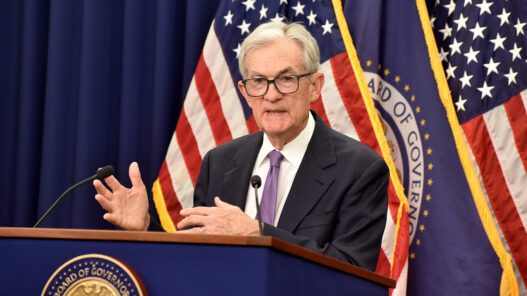
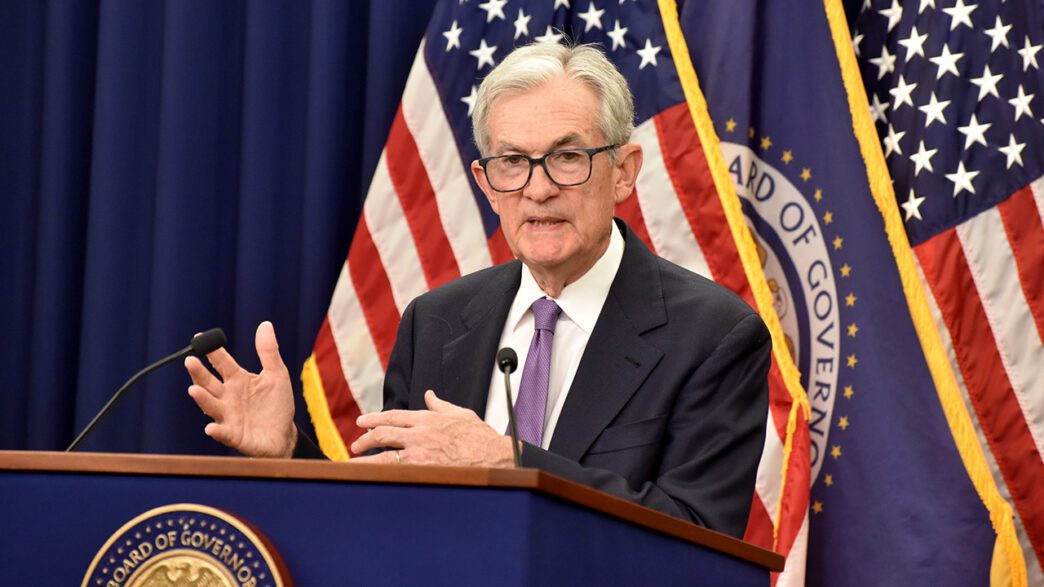
The Federal Reserve on Wednesday announced its third interest rate cut of the year as policymakers moved forward with the cut to support the labor market despite elevated inflation.
Fed policymakers voted to lower the benchmark federal funds rate by 25 basis points to a new range of 3.5% to 3.75%. The move follows rate cuts of that size in September and October, which were the first of the year.
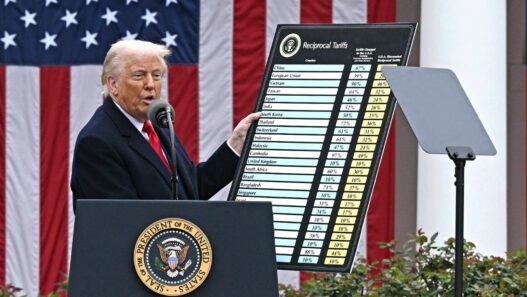
Policymakers have been tracking economic data showing a slowdown in the labor market in recent months as companies adjust to shifts in trade and immigration policy. Meanwhile, inflation has trended higher as tariff-related price hikes filter through the economy. 
Those dynamics have put the Fed in a difficult spot as it looks to fulfill its dual mandate goals of stable prices in line with the 2% long-run target for inflation as well as promoting maximum employment.
The Federal Open Market Committee (FOMC), which handles the Fed’s monetary policy decisions, voted to cut by 25 basis points with the support of nine policymakers with three dissenters. Chicago Fed President Austan Goolsbee and Kansas City Fed President Jeffrey Schmid dissented in favor of leaving interest rates unchanged, while Fed Governor Stephen Miran dissented in favor of a larger 50 basis point cut.
Policymakers said in the FOMC’s announcement that uncertainty remains elevated, with job gains slowing this year and the unemployment rate rising through September, while inflation has also risen over the course of the year and remains somewhat elevated.
Fed Chair Jerome Powell said that while important government data have been delayed due to the historic government shutdown that ended in mid-November after 43 days, available data suggested there has been a moderate expansion of economic activity.
He noted that the shutdown likely weighed on activity this quarter, though that will be offset by next quarter. Job gains had slowed significantly through September and inflation for goods has picked up this year due to tariffs.
“Risks to inflation are tilted to the upside and risks to employment to the downside – a challenging situation. There is no risk-free path for policy as we navigate this tension between our employment and inflation goals,” Powell said. He added that the Fed’s framework requires a balanced approach to both goals, which led to the decision to cut for the third straight meeting.
“With today’s decision, we have lowered our policy rate three quarters of a percentage point over our last three meetings. This further normalization of our policy stance should help stabilize the labor market, while allowing inflation to resume its downward trend toward 2% once the effects of tariffs have passed through,” Powell explained.
During the press conference, Powell was asked if the Fed is now on hold on rate cuts until there is a clearer signal about how the economy is evolving, particularly with respect to jobs and inflation.
“The Fed funds rate is now within a broad range of estimates of its neutral value, and we are well-positioned to wait to see how the economy evolves,” Powell said.
The chairman noted that there will be a significant amount of economic data released between now and the Fed’s next policy meeting in January, which will factor into its next moves. He went on to note the data for October and November will be viewed somewhat skeptically, due to the lack of data collection during the government shutdown, but more complete data for December should be available prior to the next meeting.
Powell said that following the 75 basis points of rate cuts at the three meetings to end this year and monetary policy closely neutral “that will be a place which will enable the labor market to stabilize or to only kick up one or two more tenths.”
“We won’t see any kind of a sharper downturn, which we haven’t seen any evidence of at all. At the same time, policy is still in a place where it’s not accommodative, and we feel like we have made progress this year in non-tariff-related inflation,” he explained. “As tariffs come through, as they flow through, that’ll show through next year – but as I said, we’re well-placed to wait and see how that turns out.”
This is a developing story. Please check back for updates.