



MANCHESTER, Tenn. – Several US sawmills are struggling to stay open after industry leaders said years of trade uncertainty have drained export markets and tightened margins.
The Hardwood Federation estimates at least one sawmill is going out of business every week. Additionally, the National Hardwood Lumber Association (NHLA) reported that more than 4% of U.S. sawmills have been lost due to closures and consolidations.
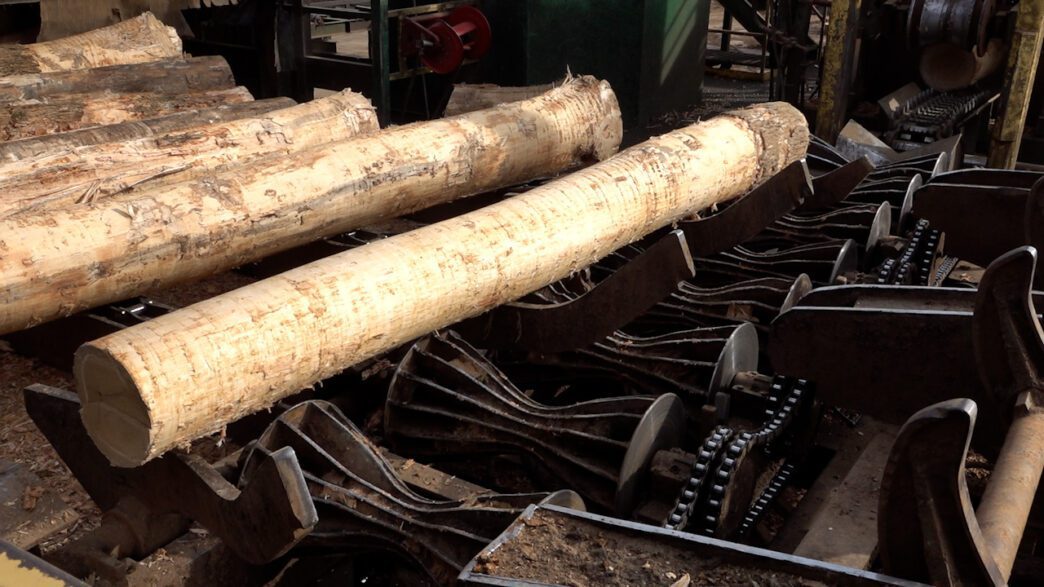
The equipment from those sawmills ends up in a growing pile of auction fliers on Johnny Evans’ desk at the Evans Lumber Co. in Manchester, Tennessee. 
However, Evans is desperate to save his sawmill from being auctioned off due to ongoing trade talks. Evans shut his sawmill down the week of Thanksgiving because he wasn’t getting enough lumber orders to keep it open. He used the week to make repairs to his equipment, which he said was great, but it doesn’t pay the bills.
“It’s deathly quiet around here,” Evans said. “Usually we run, at least three days a week. That’s not just here. It’s a lot of our other customers. They’ve chosen not to receive lumber from us this week.”
Evans said a lot of this goes back to trade tensions that began in 2018, during the first Trump Administration. That’s when some countries, like China, stopped buying American hardwood in retaliation to President Donald Trump’s tariff policies.
TARIFFS HAVE A SURPRISING EFFECT ON UNEMPLOYMENT AND INFLATION PATTERNS, FED ANALYSIS REVEALS
At the time, the Hardwood Federation reported American lumber was the second-most exported U.S. product to China. When China retaliated, the American lumber exporters lost roughly half their market share to competitors in places like Russia, Thailand and Malaysia.
Evans said the current trade negotiations between the U.S. and China are intensifying pressure that began years ago.
“The Vietnamese told us that if until America buys their product, they won’t buy our product,” Evans said. “Our sales are down, our lumber prices are down, but our expenses are twice as high as what they used to be.”
The NHLA said retaliatory tariffs from other countries remain “volatile,” creating a ripple effect that influences global hardwood flows by “tightening margins, shifting production hubs, and altering supply chain dynamics across Asia, Europe, and the Americas.”
“During the 2017 trade dispute, the hardwood industry experienced significant difficulties, including a 20-25% export decline,” Dallin Brooks, NHLA Executive Director, said. “Several companies were forced to shut down, and many others struggled to recover. This year is worse.”
In September, President Trump placed a 10% tariff on lumber and a 25% tariff on furniture and cabinets. Two weeks later, more than 450 U.S. sawmills signed a letter penned by the Hardwood Federation, pleading with the U.S. Department of Agriculture and the White House for relief. The letter outlined the hardwood industry’s desire for the Trump Administration to prioritize them during upcoming trade negotiations with China.
“We were a victim of retaliation,” Dana Lee Cole, Hardwood Federation Executive Director, said. “If enough of their products are getting tariffs coming in here and their markets are declining here, they’re going to fight back.”
Many sawmills are facing another challenge as consumers turn to cheaper composite or synthetic wood look-alike products, often marketed as “luxury” alternatives.
“The two things have come together in a kind of perfect storm to really put a lot of stressors on the industry,” Cole said.
TRUMP’S RECORD TARIFF HAUL MEETS SUPREME COURT REVIEW AS WHITE HOUSE BRACES FOR RULING
Claire Getty said her family’s sawmill in Huntland, Tennessee, has struggled to compete with big-box stores that promote vinyl or plastic flooring as premium products.
“If you’re going to go and look for a floor, say, at a big box store, you’re going to find over 200 wood-looking options in a luxury vinyl plank, four to five in a solid hardwood product, Getty said. “I truly believe that people today, consumers today want wood, but it is not available.”
Getty said the shift to ‘luxury’ wood alternatives has caused major losses that ripple from sawmills to tree farmers.
“We are an industry that’s worth saving,” Getty said.
CLICK HERE TO GET FOX BUSINESS ON THE GO
Several sawmill owners are planning an annual trip to Washington D.C. early next year to ask their representatives and the Trump Administration directly for help.